Preferred Choice Cleaning Services — Long Island, NY
You love your Long Island home — the curb appeal, the solid feel of a clean driveway, the safety of a non-slippery patio. But oil spots from a leaky car, mold and mildew from our humid coastal springs, or mysterious dark stains from years of use can make that concrete look tired and risky. Left untreated, those stains don’t just look bad — they get harder to remove, hold moisture, and invite more growth.
The Problem (in plain English)
Concrete isn’t magic. It’s porous. That means oil soaks in, mold finds a foothold where moisture lingers, and dirt embeds deep in the texture. Trying random household fixes can make things worse (or be downright unsafe), and high-pressure washing without the right approach can damage the surface. If you want the job done right — fast, safe, and long-lasting — you need a plan that targets the stain, protects your concrete, and prevents a repeat.
We’re the Guide You Need
Preferred Choice Cleaning Services knows Long Island weather — the salt air, the freeze/thaw cycles, the summer humidity — and how those conditions affect concrete. We use proven cleaning chemistry, professional equipment, and best practices so you get real results without risky shortcuts. Below is our simple plan that we walk every customer through.
Our Simple 3-step Plan (so you know what happens next)
- Inspect & diagnose. We identify whether a stain is oil, organic (mold/mildew/leaf stains), rust, or a mix — because each needs different treatment. Oil often requires degreasers or absorbents and agitation; mold and mildew respond to detergent scrubbing, targeted biocides, or controlled soft-washing.
- Treat (targeted, safe, effective).
- Oil: For fresh spills, we start with absorbents (kitty litter or a clay product), then use a concrete degreaser or commercial cleaner, agitate with a stiff brush, and follow with a rinse or a controlled pressure wash. Older, set-in oil sometimes needs a stronger alkaline cleaner or repeat treatments. Some eco-friendly microbial cleaners can also break oil down over time if you prefer green options.
- Mold & mildew: Mold on hard surfaces is removed by scrubbing with detergent and water, then drying thoroughly. For heavy growth, we use professional biocides or soft-wash solutions that remove spores without harming nearby plants when applied correctly. The key is controlling moisture afterward.
- Stubborn stains: Rust, paint overspray, or mineral deposits are handled with the right cleaners and techniques — we avoid risky acid use unless necessary and only by trained technicians.
- Protect & prevent. After cleaning, we recommend sealing or applying a protective treatment where appropriate, and advise on fixes (like addressing drainage or oil catch mats) that stop stains before they start. That’s how your concrete stays cleaner longer.
Why Our Method Works (and why DIY sometimes fails)
Household products can work on small, fresh spots, but many stains have penetrated below the surface. A professional approach combines the right chemical action, mechanical agitation, and controlled rinsing so you remove stain material rather than just smear it. And because Long Island sees humid springs and salty air, preventing re-growth and corrosion matters — we treat the root cause, not just the symptom.
What Success Looks Like
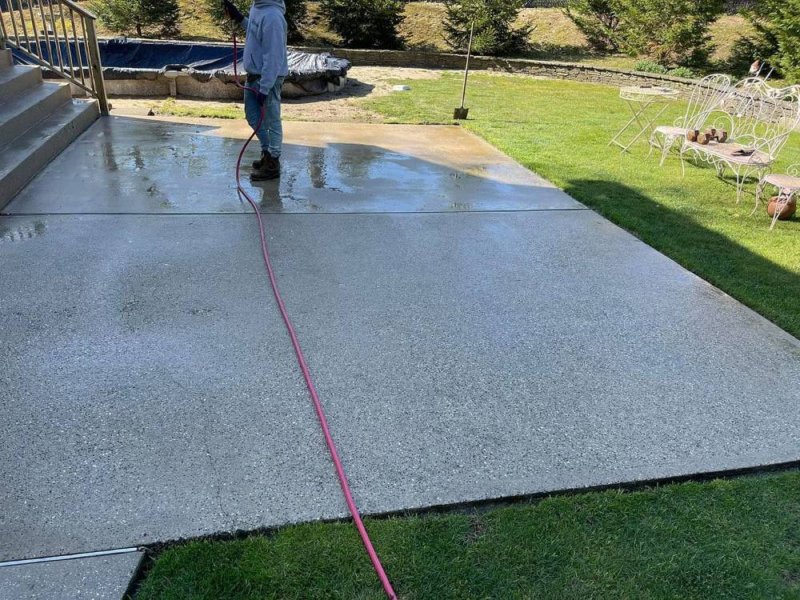
Imagine a driveway that matches your home’s curb appeal again, a safer, non-slippery patio, and fewer repeat appointments. That’s what our customers tell us: cleaner concrete, longer-lasting results, and peace of mind that the problem was handled the right way.